


06/05/2026 12:46 PM
Why planning from the start makes all the difference
6ft fence panels with trellis top are a popular choice for homeowners who want the best of both worlds: solid privacy at ground level with a decorative, light‑letting finish above. Whether your priority is aesthetics, security, privacy, or simply making the most of your garden space, a fence with a built‑in or well‑planned trellis top can completely transform the look of a boundary.

Tongue and Groove Effect Fence Panel with Diamond Trellis
The key to achieving a stable, seamless finish is planning from the very beginning. Rather than adding trellis as an afterthought, designing your fence layout from the outset ensures clean lines, consistent heights and a more secure installation, with no awkward fixings or mismatched components. Here is how to do it properly, along with some of the most popular design options available.
Why choose 6ft fence panels with trellis top?
A trellis top helps to soften the appearance of a solid fence while still maintaining privacy where it matters most. It allows light to filter through, prevents gardens from feeling boxed in, and creates an ideal structure for climbing plants. From jasmine and roses to clematis and evergreen climbers, trellis toppers help fences blend naturally into the surrounding garden.
Opting for 6ft fence panels with trellis top also provides added height without overwhelming the space. When planned correctly, the result feels balanced, intentional, and far more premium than a fence where trellis has been added later as a bolt‑on.
Built in ease: Canterbury Combi
One of the simplest ways to achieve a clean, cohesive look is by choosing a fence panel that already includes the trellis element.
Canterbury Combi is a great example. This 6ft panel combines a solid lower section with a decorative Venetian‑style slatted top, all manufactured as a single unit. The lower three quarters provide privacy and strength, using tongue and groove effect pales for a high‑quality appearance, while the slatted top brings light, height and interest.

Because the trellis‑style top is built in, there is no need to align separate panels or worry about fixings later on. Installation is straightforward, the finish is seamless, and the overall structure is more stable than retrofitted alternatives.
Classic combinations with separate trellis toppers
If you prefer a more traditional look, a modern or unique style, or want flexibility in your design, combining fencing panels with trellis toppers is another popular approach. When planned correctly, these combinations work beautifully.
Some of the most popular options include:
-
Featherboard panels with square trellis
A timeless combination that suits both period and modern gardens. The structured grid of square trellis adds definition above the more rustic featherboard base. Square trellis works well in both flat‑top and curved‑top versions, depending on whether you prefer crisp lines or a softer finish.

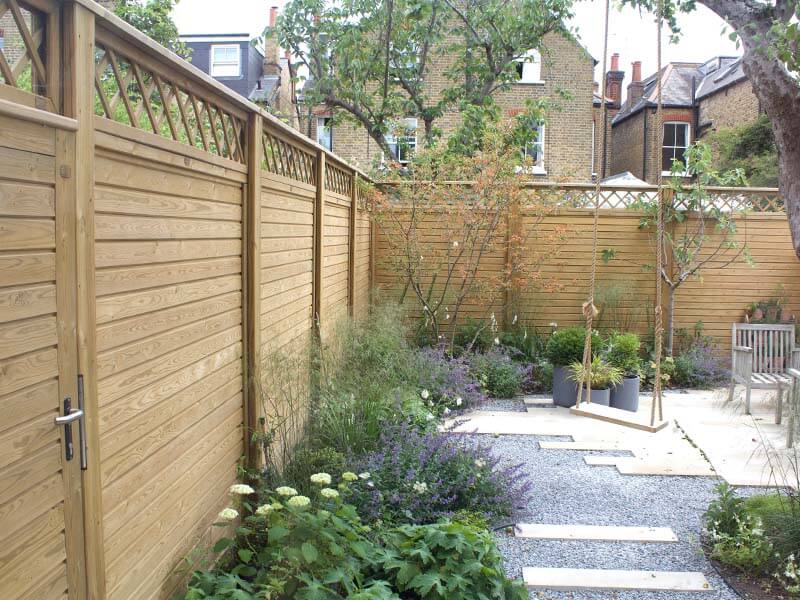
- Tongue and Groove panels with diamond trellis
This pairing delivers a premium, decorative look. The smooth, solid appearance of tongue and groove fencing contrasts nicely with the angled detail of diamond trellis, making it ideal for garden boundaries that are highly visible. We even make a trellis with a curved top and bottom which works with our Convex Tongue and Groove Effect panels, providing cohesive, flowing lines throughout the fence line.
-
Chilham panels with lattice trellis
Chilham panels already feel refined, and adding a lattice trellis enhances this further. This combination suits cottage‑style gardens or spaces where planting plays a central role.
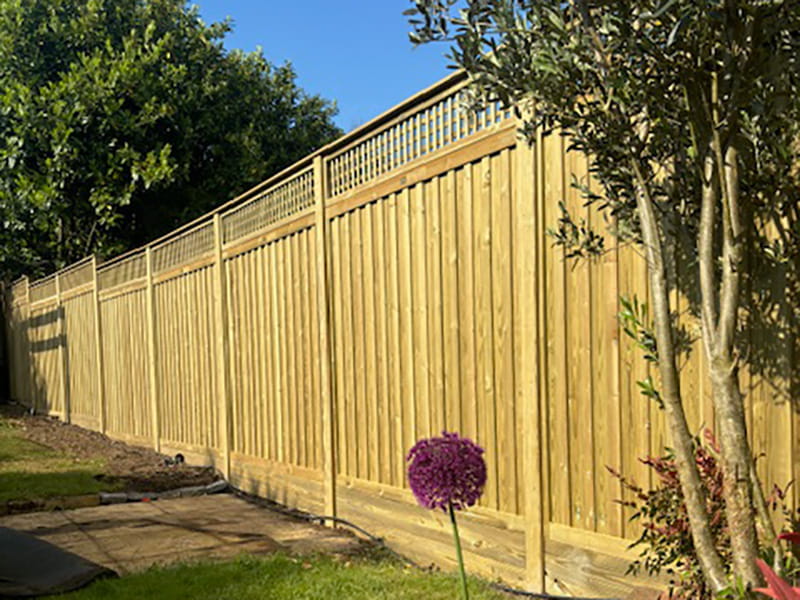
All of these options work particularly well when the fence and trellis are designed to work together from the start, rather than mixed and matched later.
Fence topper alternatives: Roman and Viking
Aside from traditional trellis, fence toppers offer another way to add height and character to a boundary.
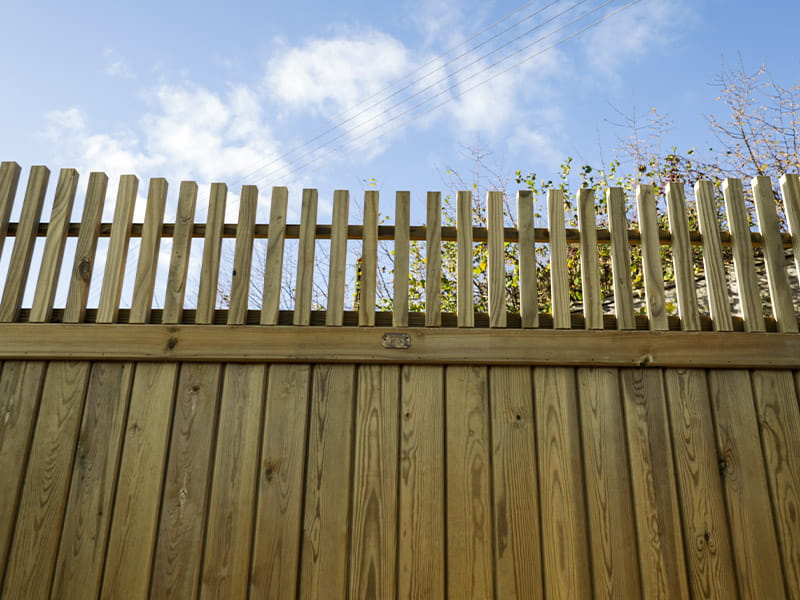
Roman fence topper panels feature vertical timber pales that resemble columns, creating a strong architectural look. Roman toppers work exceptionally well across a wide range of fence panels, from tongue and groove to more decorative designs. They are ideal if you want height and visual impact without the open structure of trellis, and are especially popular with garden designers.

Viking fence topper panels, on the other hand, are designed primarily with security in mind. Their curved timber profile makes it difficult for intruders to gain a solid grip, providing an effective anti‑climb solution. Viking looks best when paired with solid fencing panels, where its shape stands out while reinforcing the security of the boundary.
The importance of slotted posts (Jakposts®)
When installing 6ft fence panels with trellis top, the choice of posts plays a huge role in the stability and longevity of the fence run.
We strongly recommend using slotted timber posts, such as Jakposts®, particularly when trellis toppers are involved. These posts make it far easier to combine fence panels and trellis, as each section simply slots into place.
- Panels can be fixed into the post using screws, preventing lifting or removal
- Improved structural strength across the entire fence line
- Easier installation with precise alignment
- The whole fence run is locked together rather than relying on individual fixings
- No unsightly clips or wedges causing panels to rattle in the wind
This is especially important when adding height, as it helps the fence cope better with wind and long‑term movement. Jakposts® also come with a 25‑year guarantee against rot and insect attack.
Don’t forget the gravel board
Gravel boards are often overlooked, but they are essential for keeping fence panels off the ground and play a crucial role in planning fence height. Standard gravel boards are 140mm high, and this must be factored into your overall calculations.
They protect the bottom of fence panels from ground moisture, significantly extending their lifespan. However, because they add height, failing to include them in planning can result in a fence that exceeds permitted levels or looks out of proportion.
Common height combinations explained
If you want to stay below the permitted two‑metre height, the following combinations work well:
-
0.30m high trellis panel
Combined with a 1.65m high fence panel and a 140mm gravel board -
0.45m high trellis panel
Combined with a 1.52m high fence panel and a 140mm gravel board
There is flexibility within these guidelines. Creative solutions such as half‑solid, half‑slatted designs or trellis on semi‑solid panels can work beautifully when total height and structure are considered from the start.
Plan once, get it right
The best fences are planned, not pieced together. By deciding on your panel style, trellis or topper design, post system and gravel boards from the outset, you can create a fence that looks intentional, feels solid and performs well year after year.
The most important consideration is ensuring posts are long enough to accommodate all components. Extending fence height later is difficult, unattractive and never achieves the same strength. As a guide, we recommend a minimum of 600mm set into the ground.
For example, with a 140mm gravel board, a 1.5m Featherboard panel and a 300mm diamond trellis topper, the above‑ground height is 1940mm. Adding 600mm below ground means a total post length of at least 2540mm, making a 2.7m post the appropriate choice.
Related content
Fence panels with slatted sections or trellis tops provide excellent visual appeal, but they are also practical. Our blog post below discusses their impact in wind-prone gardens.
Are slatted fence panels better for wind-prone gardens?
Discover modern fencing ideas in our blog post:
Elise is a part of the Jacksons residential marketing team, writing regular columns on gardening, garden design and everything that is garden fencing, gates and structures.