


05/03/2026 12:00 AM
Picket fencing is one of the most popular choices for garden boundaries because it offers a balance of character, visibility, and practicality. At Jacksons, picket fencing is referred to as wooden palisade fencing. When installing wooden palisade fencing in kit form, one of the most important design decisions is the spacing between the pales. Correct spacing keeps the fence safe and functional and ensures that it delivers the appearance and performance you expect.
This guide explains how to choose the right pale spacing, why spacing matters, how Jacksons picket panels remove the need for manual spacing, and how spacing can be influenced by slopes, garden layout, and decorative design choices.
Explore the full picket fencing range:
Why Pale Spacing Matters
Correct spacing between pales influences:
- Visibility through the fence
- Containment for pets and children
- Structural strength
- The overall appearance and balance of the fence
- Wind flow
- Security for taller versions
- Safety, including entrapment risk
Good spacing keeps the fence looking tidy and consistent, while incorrect spacing can create uneven lines, structural weakness, or entrapment hazards.
How to Space Pales in Kit Form Picket Fencing
Kit form wooden palisade fencing provides complete control over pale placement. Each rail, post, and pale is supplied individually, following the layout shown in the Jacksons Palisade Traditional installation instructions. This flexibility allows you to:
- Adjust spacing to suit your design
- Create curved or angled runs
- Adapt to slopes and uneven ground
- Use taller pales up to 1.8 metres
- Create decorative patterns
- Install double sided fencing if required
Important safety note
Whatever spacing you choose, it is best to keep it uniform and be aware that different spacing can potentially increase the risk of entrapment, so the location should always be considered.
Entrapment risk is particularly important when fencing is near areas used by children or small animals.
Kit Form Picket Fencing on Slopes
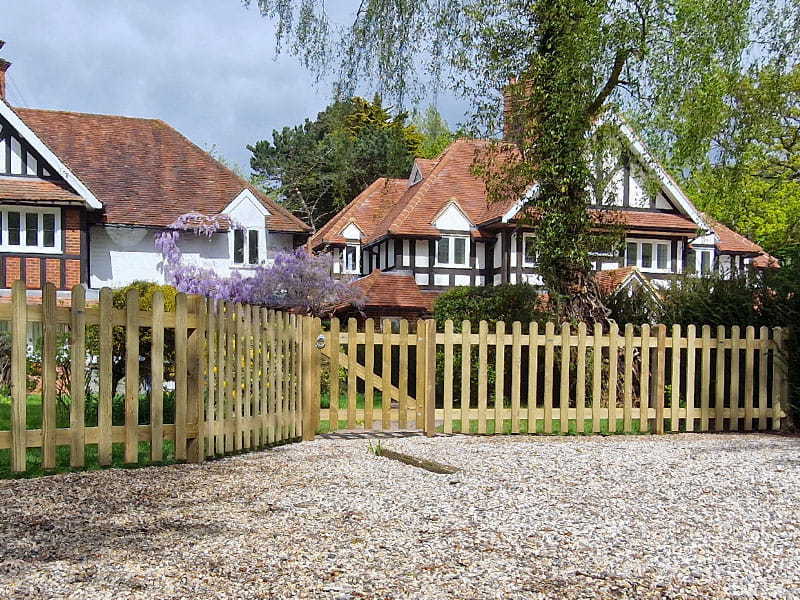
Kit form fencing is commonly used on sloping ground because it can follow the line of the land. Unlike prefabricated panels, which create a stepped effect when installed on a slope, kit form fencing can run smoothly with the ground. When using prefabricated picket fence panels on a slope, the installation must be stepped because the panels are level units that cannot rake with the ground.
This natural flowing design can affect pale spacing because:
- The rails may be angled
- The gap between pales can appear visually different on a steep slope
- Additional adjustment may be needed to keep spacing consistent
- Pales must remain vertical even when the rails follow the ground
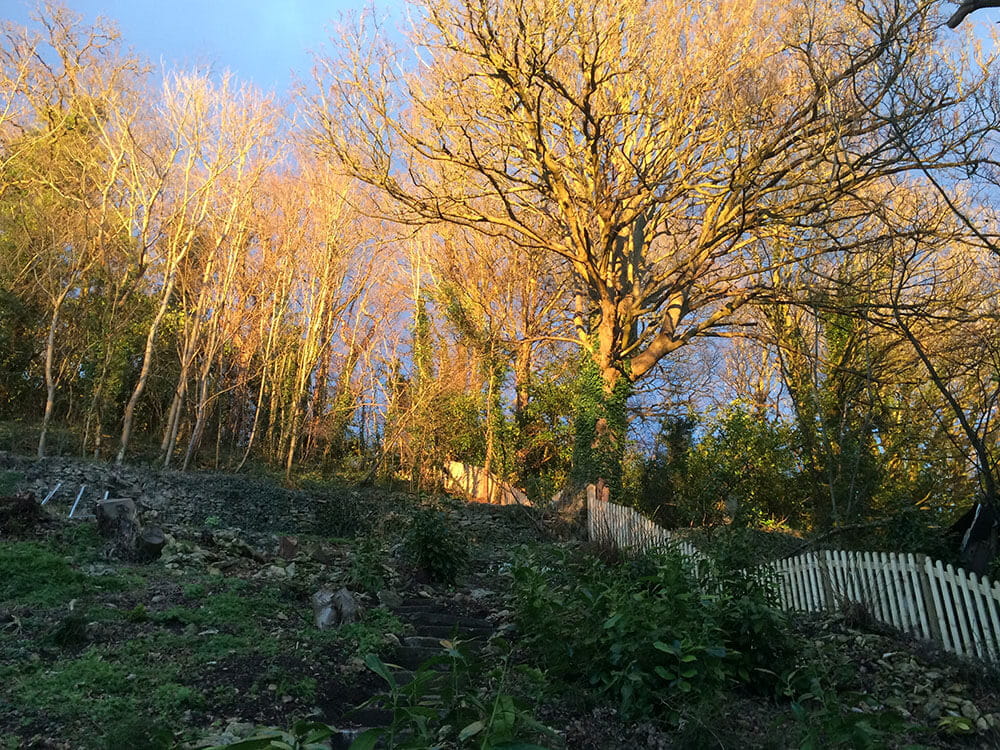
A recent customer project demonstrated how kit form picket fencing can follow sloping terrain while keeping the appearance balanced and consistent. When working on slopes, installers often spend more time checking spacing to make sure the visual rhythm of the fence remains even from top to bottom.
How Picket Fence Panels Solve Spacing Automatically
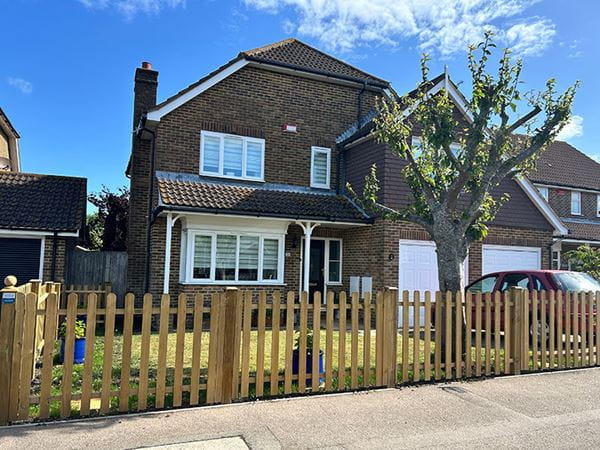
For homeowners who prefer a quicker installation, picket fence panels are manufactured with the pales set at the ideal spacing. This means:
- No marking out is required
- No pale positioning is needed
- Alignment is perfectly even
- Spacing is structurally correct
- Installation is faster
Panels are ideal when you want long straight lines of fencing with consistent spacing and a professional finish without the need for custom layout adjustments.
Spacing for Different Garden Needs
Visibility and openness
Wider gaps create a lighter and more welcoming boundary. This is popular in front gardens where a solid fence may look too heavy.
Pet and child containment
Narrower gaps reduce the chance of children or pets slipping through the fence.
Security
Taller kit form pales, including 1.8 metre versions, provide more security while still maintaining visibility. The open structure helps prevent hidden areas while still acting as an effective boundary.
Entrapment considerations
Spacing should always be chosen with safety in mind to reduce the risk of limbs or heads becoming trapped between pales.
Why Picket Fencing Is Not Best Practice for Play Areas
Although picket fencing is sometimes used in play areas, it is not recommended. Traditional wooden palisade fencing does not include anti trap features, and spacing between pales may create entrapment risks.
The correct choice is Playtime fencing, which:
- Includes anti trap design
- Is engineered to prevent entrapment
- Is designed to resist vandalism, a common issue in public play areas
- Provides a safer environment for children
Explore the Playtime Playground Fencing Range
Double Sided Picket Fencing and Decorative Pale Arrangements
Kit form fencing allows for many creative styles.
Double sided picket fencing
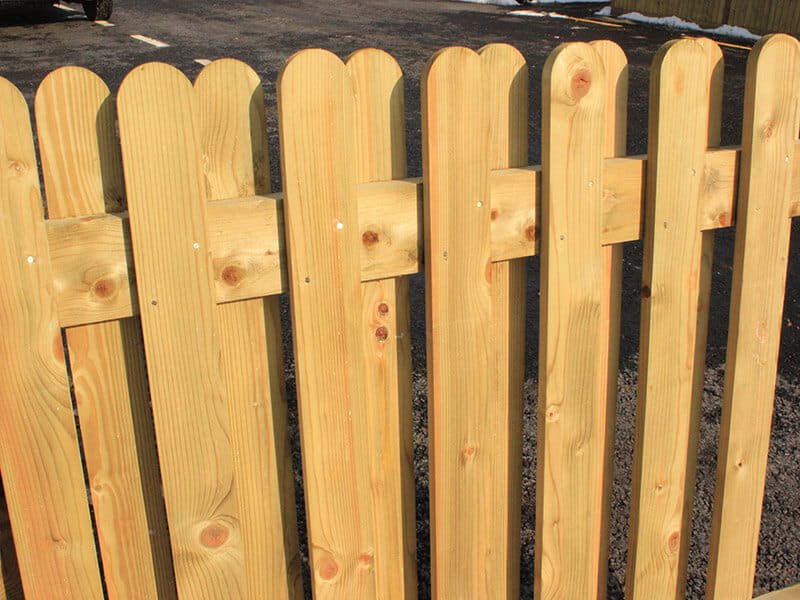
Pales are installed on both sides of the rails, usually offset (Sometimes known as Hit and Miss). This creates:
- A more substantial looking boundary
- An attractive appearance on both sides
- A semi solid look while still allowing visibility at angles and wind to pass through
- Sometimes used to stop headlights through fences
The image below shows an example.
Decorative spacing styles
Because kit form fencing is built pale by pale, you can create unique designs such as:
- Alternating pale widths
- Zigzag effects
- Repeated grouped patterns
- Feature sections that break up long runs
These ideas are explored further in the Jacksons article about different styles of picket fencing.
Choosing the Right Approach for Your Garden
When planning your wooden palisade fence, consider:
- How much visibility you need
- Whether the garden includes slopes
- Whether the fence needs to contain pets or children
- Entrapment risk in your chosen location
- Whether you want a decorative or double sided style
- If prefabricated panels would save time
- Whether taller pales would improve security
Kit form picket fencing gives you complete freedom to adapt spacing and layout, while picket panels provide a fast and consistent installation.
Explore the Full Range
To compare all styles, heights, and components, visit
Related Blogs
Discover how a rounded top picket fence installation in Essex enhanced a countryside cottage’s charm, blending timeless design with practical benefits.
Picket Fence Installation in Essex
You may also be interested to read our advice on hedges versus fencing, and another project in which a hedge was replaced with a fence: