02/03/2026 12:00 PM
It is a fair question and the answer is this. Yes, most standard wooden gravel boards will rot if they are not properly treated and prepared for life in ground. Gravel boards sit at the very base of your fence, often in contact with damp soil, rain splash, and garden debris. This is why concrete has traditionally been recommended as the safer option, but timber gravel boards that are properly prepared last just as long, or longer, and come with additional benefits, as we will explain in this blog post.
The Changing Reality of Concrete
Concrete gravel boards built their reputation on durability. Historically, they were considered the long term, maintenance free solution because they do not rot. However, manufacturing standards and material compositions have evolved. This can make concrete posts more vulnerable to cracking, chipping and surface deterioration, particularly where there is ground movement, frost exposure or accidental impact. Hairline cracks may develop and expand over time, affecting both appearance and structural integrity. As a result, the assumption that concrete will always significantly outlast timber without issue is no longer universally accurate.
Concrete can also appear harsh in a garden environment. For homeowners investing in quality timber fencing, it can interrupt the natural, cohesive look of the boundary. Timber provides a softer, more refined finish that complements fence panels and posts.
Not All Timber Is the Same
The key distinction lies in how the timber is treated.
Timber gravel boards are unlikely to rot if they have been properly pressure treated for ground contact rather than simply surface treated. When treatment is absorbed deep into the timber under controlled pressure, protecting both the sapwood and the heartwood, the board can then resist decay and insect attack for the long term. When this level of treatment is supported by a substantial guarantee, it reflects genuine confidence in the durability of the product rather than a superficial coating.
By contrast, basic dip treated boards only have a surface layer of protection. Once moisture penetrates beyond that outer coating, the untreated core becomes susceptible to decay.
Why Our Timber Gravel Boards Perform Differently
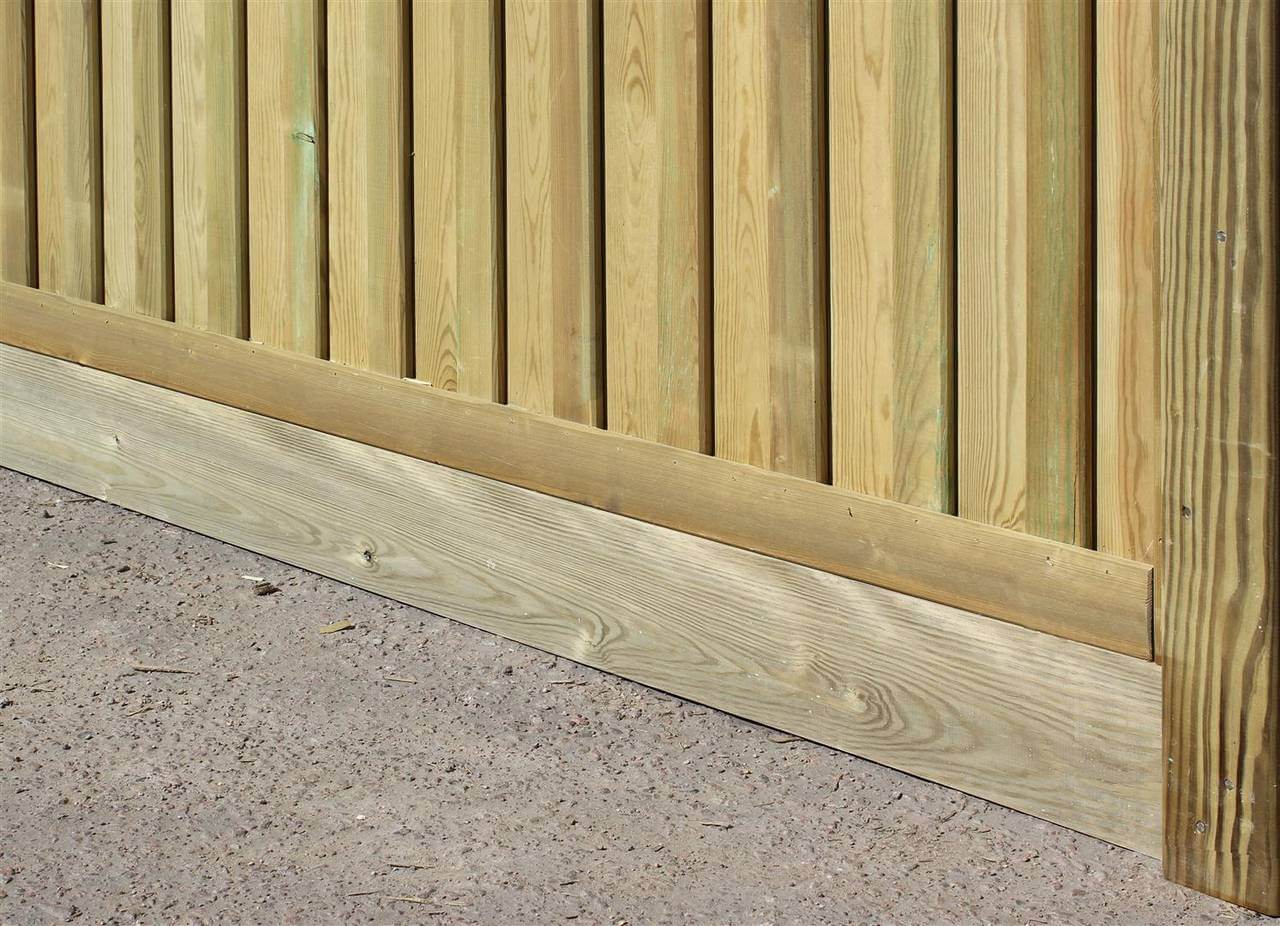
Our timber gravel boards are manufactured to a higher standard. They are planed for a smooth finish and designed to raise fence panels off the ground, protecting them both above and below ground while maintaining a natural timber aesthetic.
They are kiln dried and pressure treated using the Jakcure® process and supplied with a 25 year guarantee against rot and insect attack. Unlike many standard wooden gravel boards on the market, our gravel boards are designed to resist rot and deterioration under normal ground contact conditions. They are also low maintenance and do not require frequent retreatment to maintain their performance.
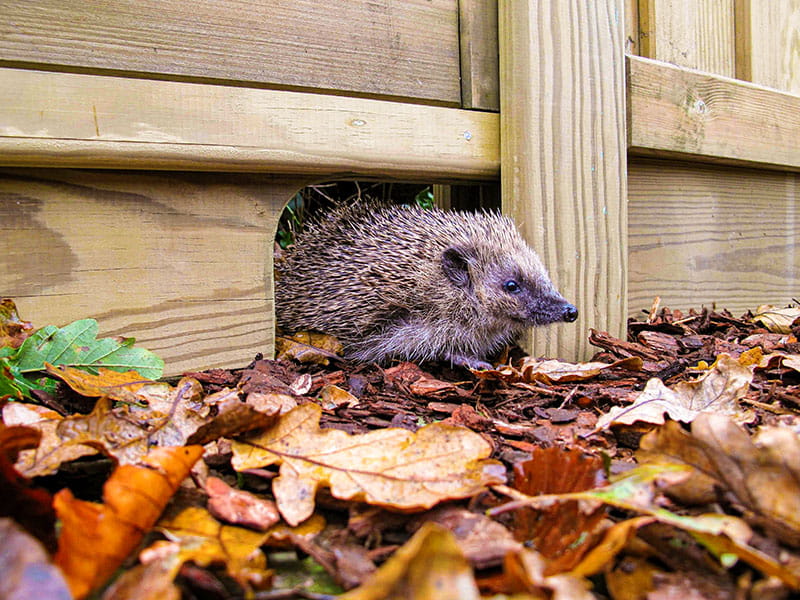
Hedgehog friendly gravel board
The Jakcure® Treatment Process
The performance of a gravel board depends entirely on the depth and quality of treatment. Jakcure® is the preservative treatment process we developed and use to enhance the durability and long term performance of our timber.
Untreated softwood has always been vulnerable to rot and insect attack. Traditional methods such as brushing or dipping timber in preservative only protect the surface and cannot reach the parts below ground.
The Jakcure® process is far more thorough.
All softwood is first tested for moisture content. Timber above 30% moisture content is kiln dried to below 28% (read more about the timber treatment process here). This stage is essential because excess moisture prevents deep absorption of preservative.
The timber is then placed in a treatment vessel where preservative is forced in under vacuum and pressure. It penetrates through the outer sapwood and deep into the heartwood, where it forms an insoluble compound that provides lasting protection against rot and insect attack, both above and below ground.
At least 50% more preservative is pumped into the timber than required by British and European standards, including BS EN 599-1 and BS 8417. Greater preservative loading provides greater protection and a longer service life.
When Jakcure® pressure treated, the gravel board is protected against rot and insect attack for 25 years.
Protection Where It Matters Most
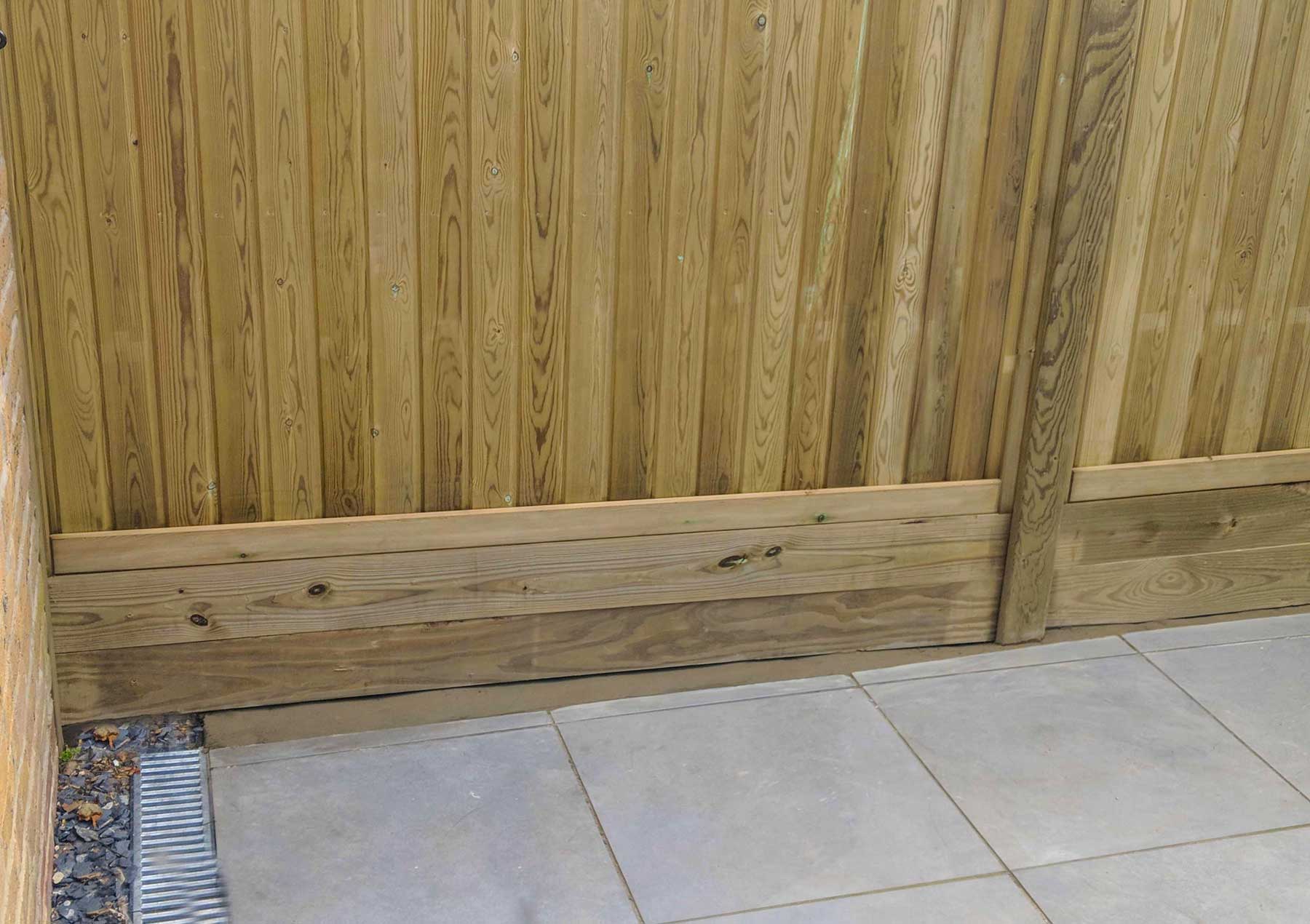
Gravel boards are designed to act as a protective barrier. Their purpose is to prevent fence panels from sitting directly on wet ground, which can accelerate decay. In effect, they take the exposure so the main structure of the fence does not have to.
Where panels are in contact with the ground, gravel boards must be used to comply with the 25 year Jakcure® guarantee terms and conditions. Where possible, cutting or notching timber that will be in ground contact should be avoided. If cuts are necessary, an appropriate cut treatment should be applied to maintain full protection.
Timber Versus Concrete
In conclusion, concrete remains a practical option if you are seeking a non-organic material that will not decay, which is why it has traditionally been recommended. However, modern concrete products can be prone to cracking and may not always deliver the long term performance once associated with older, denser mixes.
Cheaper, untreated or lightly treated wooden gravel boards will eventually rot, reinforcing the perception that concrete is the safer choice.
In contrast, high quality timber gravel boards that have been deeply pressure treated and backed by a long guarantee are engineered for durability and resistance to decay. When properly installed, pressure treated timber provides a strong and reliable alternative with comparable longevity, while offering a cohesive natural appearance that blends seamlessly with timber fencing and a more environmentally considerate solution. Far from being a compromise, well treated timber is a durable, long term option that performs as well as it looks.
Related content:
What is a gravel board and is it essential?
Concrete or Wooden Fence Posts?