


03/06/2026 08:36 AM
Installing driveway gates can dramatically improve the security, privacy, and appearance of a property. Whether the aim is to define an entrance, complement period architecture, or control access to a driveway, gates are often one of the first exterior improvements homeowners consider. However, before ordering new gates or arranging installation, it is important to understand whether planning permission is required.
In many cases, driveway gates fall under permitted development rights, meaning a formal planning application is not needed. That said, there are specific rules around height, location, and property type, and these rules are enforced at a local level. This guide explains how planning permission works for driveway gates in England, when approval is required, and what additional factors should be considered before installation.
It is always worth double checking with your local planning authority or parish council, in addition to national planning rules, as there may be specific restrictions in your area. For example, you may live within an Area of Outstanding Natural Beauty (AONB).
Permitted development rules for driveway gates
In England, driveway gates are usually classified as permitted development if they meet the following height limits:
- Gates, walls, or fences next to a highway may be no more than 1 metre high
- Gates elsewhere on the property boundary may be up to 2 metres high
A highway includes roads, footpaths, pavements and bridleways. If your driveway opens directly onto any of these, the lower height restriction will apply.
If your proposed gates fall within these limits and your property benefits from normal permitted development rights, planning permission is typically not required.
In certain situations, there are circumstances where planning permission exceptions apply, offering relief for homeowners who wish to install driveway gates. Homeowners might not require planning permission if they are substituting an existing boundary feature, such as an old gate or fence, with a new driveway gate. This exemption often allows for the replacement of deteriorated or outdated features at the height of the old gate without the necessity of obtaining additional planning approval.
Situations where planning permission is required
There are several circumstances where driveway gates will need formal approval:
- If the gates exceed the permitted height limits, a planning application will be required.
- If the property is a listed building, any new gates or alterations to existing gates will require listed building consent.
- If the property is subject to an Article 4 Direction, permitted development rights may have been removed.
- If the gates would create a highways safety concern, such as obstructing visibility when entering or exiting the driveway, the council or highways authority may object.
It should also be noted that gates opening inward are more welcomed than gates that open outwards, but this may be adjusted if the driveway is particularly sloped. In these cases, a sliding gate is often recommended instead of a swing gate.
Driveway gates in conservation areas
There is a common misconception that planning permission is always required in conservation areas. This is not necessarily the case.
In most conservation areas, the same permitted development height limits apply. However, councils may be stricter when assessing the visual impact of gates, especially where they form part of a prominent street frontage. If an Article 4 Direction is in place, planning permission will almost certainly be required.
It is always advisable to check with the local planning authority before proceeding if your property is in a conservation area.
Measuring gate height correctly
Gate height is measured from the lowest point of ground immediately adjacent to the gate. Sloping driveways can cause confusion, so care should be taken when confirming measurements. Councils will assess the highest visible point of the structure, including any decorative finials or arched sections.
Incorrect assumptions about height are one of the most common reasons homeowners encounter planning enforcement issues.
Lawful Development Certificates
If there is any uncertainty about whether planning permission is required, homeowners can apply for a Lawful Development Certificate. This provides legal confirmation that the proposed gates are permitted development.
While not mandatory, it can be useful for peace of mind and may be beneficial if the property is later sold.
Types of driveway gates
Choosing the right style of driveway gate is about more than aesthetics. Construction quality, materials, and structural design all affect longevity and performance.
Courtyard gates
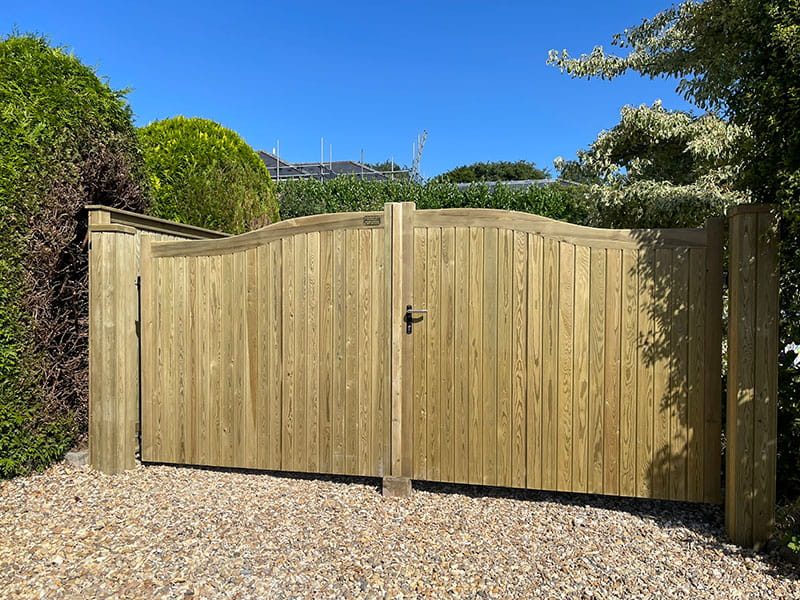
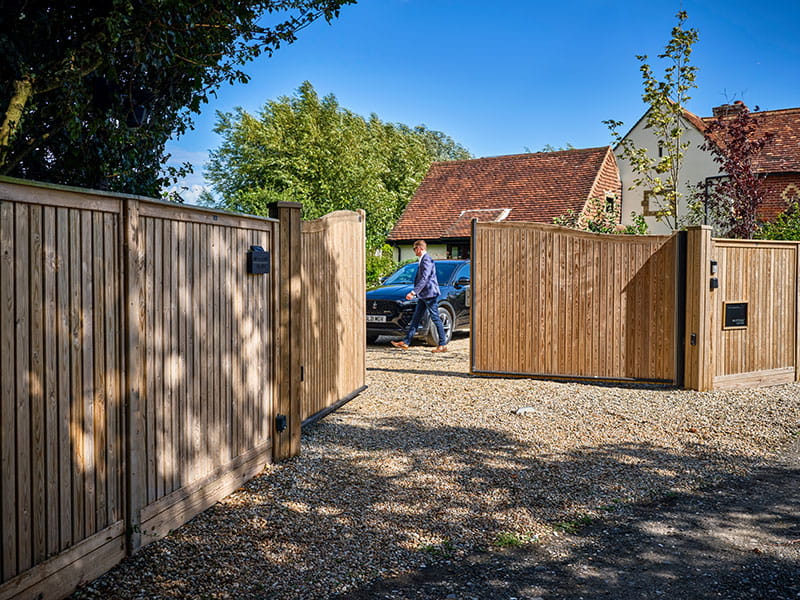
Our courtyard gates are a popular choice for wider entrances and larger properties. These driveway gates are timber on the outside but incorporate a galvanised internal steel frame. The steel frame provides strength and stability, significantly reducing the risk of movement, sagging, or warping over time. This construction method combines the traditional appearance of timber with the structural benefits of steel, making it particularly suitable for large spans or automated systems.
Some styles like Whitstable and Cathedral also feature steel elements on the outside for a modern or elegant look.
Ornamental metal gates
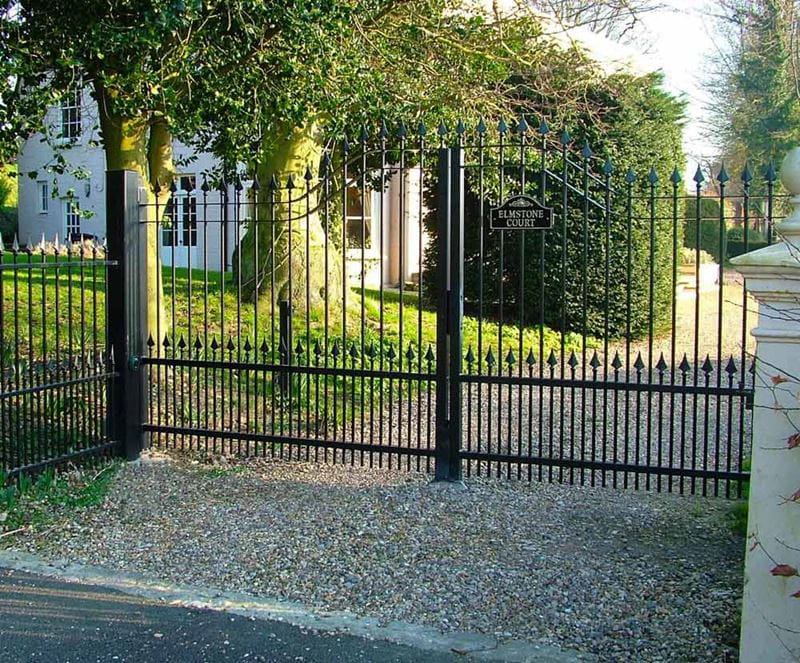
Our decorative ornamental metal gates are manufactured from galvanised tubular steel to mimic the appearance of wrought iron while ensuring a long lasting, low maintenance choice. They offer excellent durability and can be powder coated for customisation and increased corrosion resistance.
Ornamental driveway gate designs allow for good visibility through the gate, which can help with sightlines and highways visibility while still providing a strong physical barrier.
Traditional wooden entrance gates
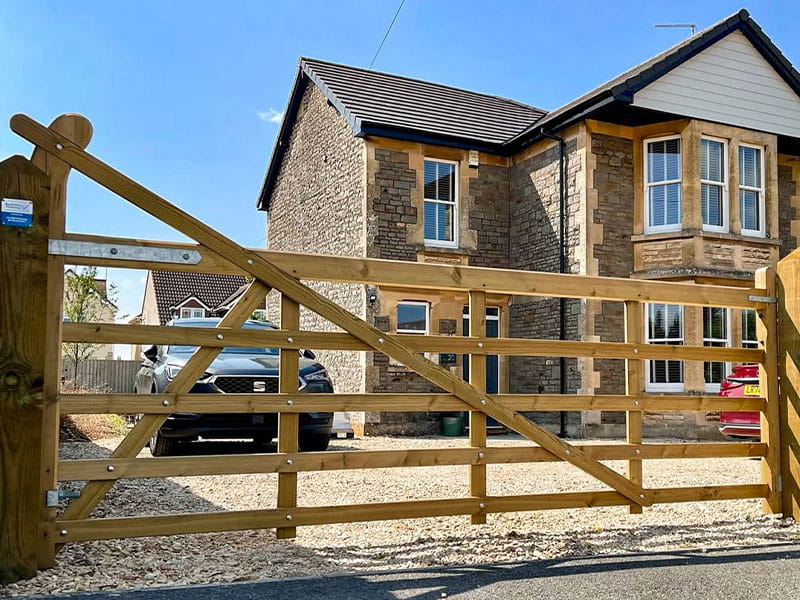
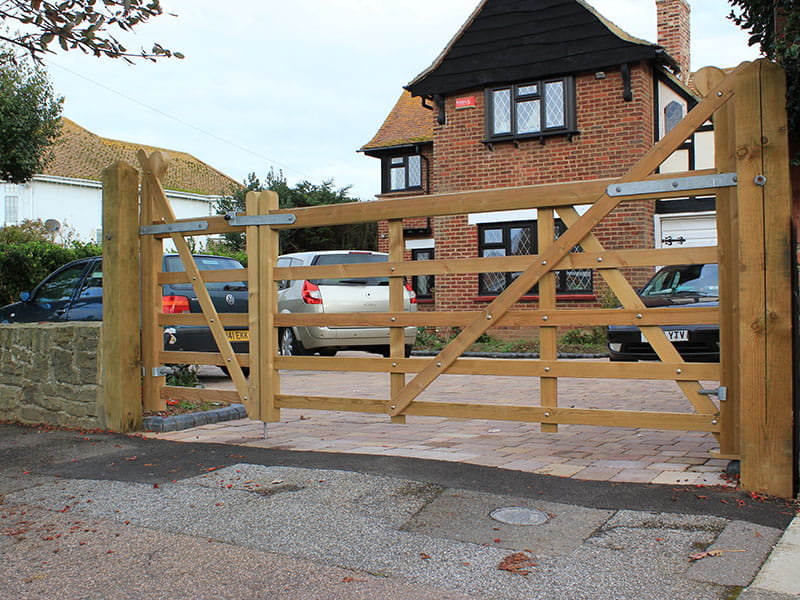
Traditional wooden entrance gates with a raised helve are closely associated with countryside and estate entrances. The raised helve improves rigidity across the gate leaf and helps distribute weight more evenly.
With their wooden bar construction and low height they are ideal for maintaining sightlines and commonly used for properties with a short driveway as their open design does not block light entering the house.
For more inspiration, read our driveway gate ideas blog post.
Automation and electric driveway gates
Automated driveway gates add convenience and security, but they also introduce additional responsibilities.
Designing gates for automation
A gate that is intended to be automated should be designed differently from the outset. Retrofitting automation to gates not built for it can lead to structural issues.
Common design adaptations include:
- Heavier bottom rails to resist twisting forces
- Reinforced hanging stiles
- Correct bracing for the chosen opening method
- Precise hinge alignment and fixing points
Without these adaptations, gates can twist, drop, or strain automation equipment, leading to premature failure and safety risks.
Safety and legal requirements
Electric gates are classed as machinery and must comply with UK safety standards. This includes force limitation, obstacle detection, and appropriate safety devices such as photocells and safety edges.
It is vital that automation is installed by a certified professional engineer who understands both mechanical and electrical safety requirements. Professional installation protects users from injury, ensures compliance with standards, and improves long term reliability.
In the event of an accident, responsibility may fall on the property owner if the system has not been installed or maintained correctly.
Other permissions and considerations
Planning permission is only one aspect of a driveway gate project. Additional considerations may include:
- Highways approval if gates open towards the road
- Covenant or lease restrictions on managed estates
- Ongoing maintenance requirements for timber or metal finishes
Ignoring these factors can result in costly changes later.
Summary
In most cases, driveway gates in the UK do not require planning permission, provided they stay within permitted development height limits and the property is not subject to additional restrictions. However, exceptions apply for listed buildings, conservation areas with Article 4 Directions, and situations affecting highways safety.
The choice of gate design, construction method, and automation should be carefully considered from the outset. Well designed gates that are correctly engineered for their purpose will last longer, operate safely, and avoid unnecessary complications.
If there is any doubt, consulting your local planning authority or a specialist gate professional before proceeding is always the most sensible approach.
Related content
View our full range of driveway gates:
Read why internal steel frames matter when looking at buying timber driveway gates:
Elise is a part of the Jacksons residential marketing team, writing regular columns on gardening, garden design and everything that is garden fencing, gates and structures.