


29/05/2026 03:32 PM
Unwanted noise from neighbours, nearby roads, or busy environments can quickly take the enjoyment out of your outdoor space. Whether it’s constant traffic or everyday activity from surrounding properties, it often feels difficult to escape. This is where acoustic garden fencing can make a real difference.
Designed specifically to manage and reduce sound, acoustic fencing offers a practical way to create a quieter, more private garden. However, achieving effective noise reduction is not just about installing a fence. It is about understanding how the whole system works together.
What is acoustic garden fencing?
Acoustic garden fencing is purpose-built to reduce noise transmission. Unlike standard fence panels, which are made from lighter weight materials and often have gaps or will develop gaps over time, acoustic fencing is designed to either absorb or reflect sound waves.
The key aim is to reduce the amount of noise that passes through the fence. While it will not eliminate sound completely, a well designed system can significantly reduce noise levels, making your outdoor space far more comfortable.
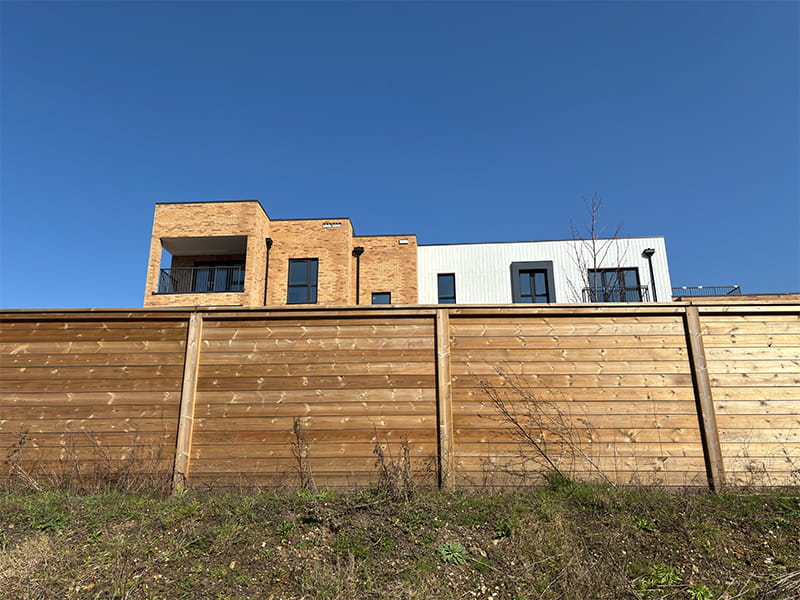
How acoustic fencing reduces noise
To understand how acoustic fencing works, it helps to look at how sound behaves outdoors.
Sound travels in waves and will:
- Pass through gaps or weak materials
- Reflect off hard surfaces
- Travel over barriers if they are not tall or dense enough
Acoustic garden fencing works by:
- Using dense materials to block and reflect sound transmission
- Creating a continuous barrier with no gaps
- Increasing height to reduce sound travelling over the top
This combination helps interrupt the path of sound waves, resulting in noticeable noise reduction.
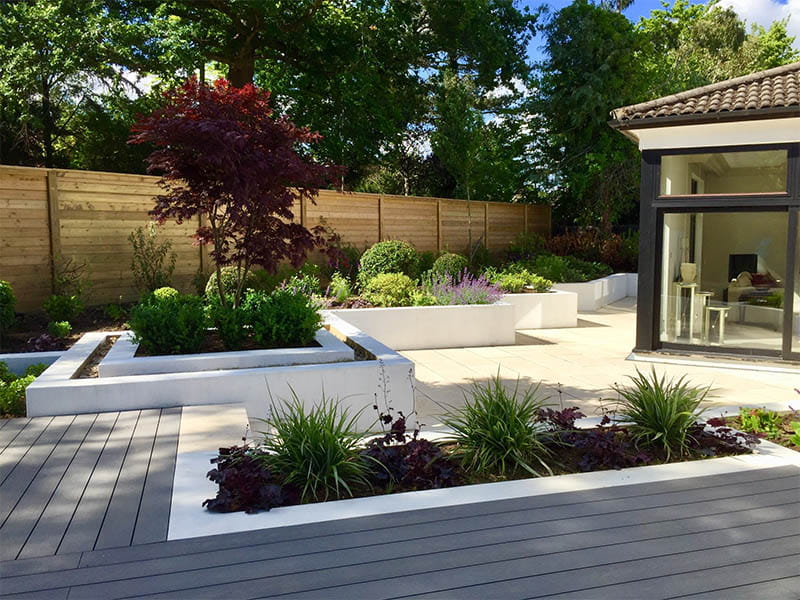
What makes a good acoustic garden fence?
Not all fencing marketed as ‘acoustic’ or ‘noise reducing’ performs to the same standard. For effective results, several key elements need to be in place.
1. Density and mass
The most important factor in acoustic performance is mass. Heavier, denser materials are better at blocking sound.
High quality acoustic garden fencing is typically of solid timber construction with heavy panels or boards using specific raw materials that have minimal knots. The more mass the fence has, the less sound will pass through it. Components should fit tightly together using elements like tuning fork posts and deep V tongue and grooves.
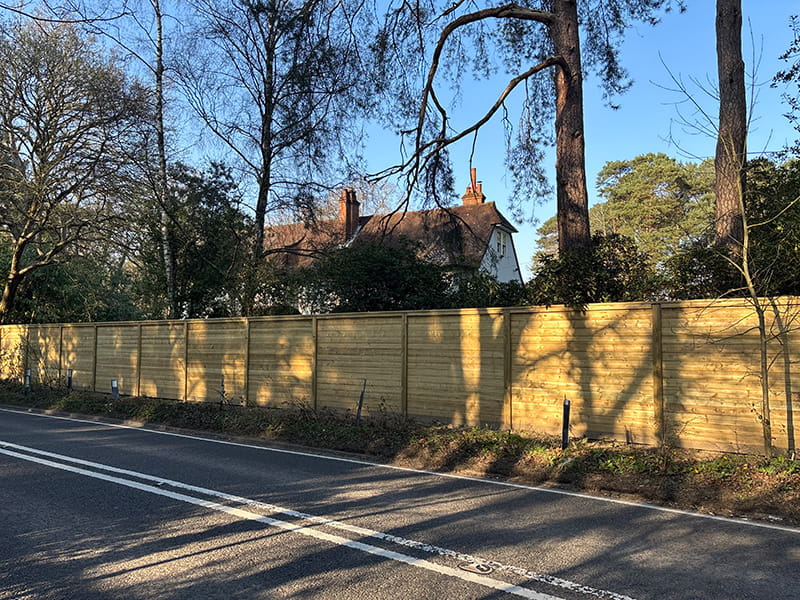
2. No gaps or weak points
Even a small gap can significantly reduce performance. Sound will always find the easiest path, so a good acoustic system must be continuous.
This means:
- There should be no gaps between boards or panels and posts, even at ground level
- Gates should be of the same specification to plug the gap effectively
A standard garden fence with gaps, no matter how small, will let sound through easily, making it far less effective than a properly installed acoustic solution. Gaps can develop over time as overlapping boards gradually shift apart; alternatively, if lower grade raw material containing knots is used, these knots may loosen and fall out, leaving visible gaps in the surface.
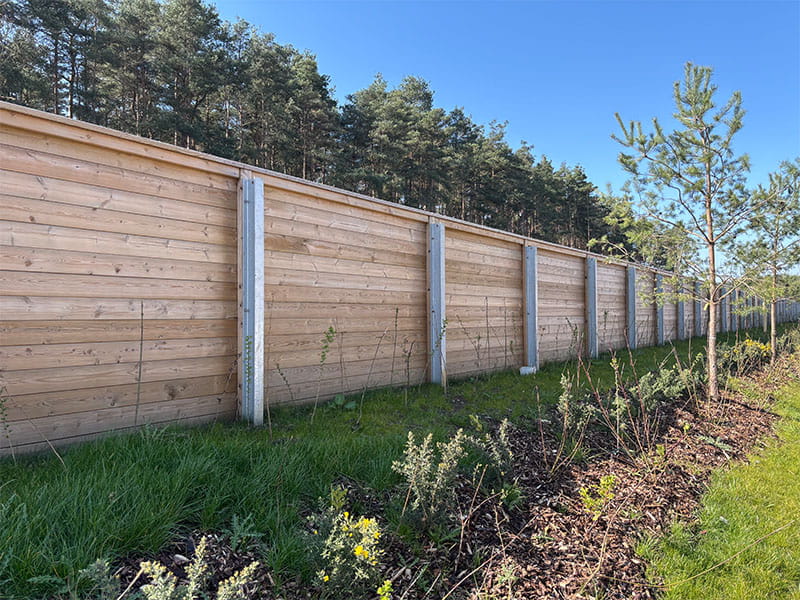
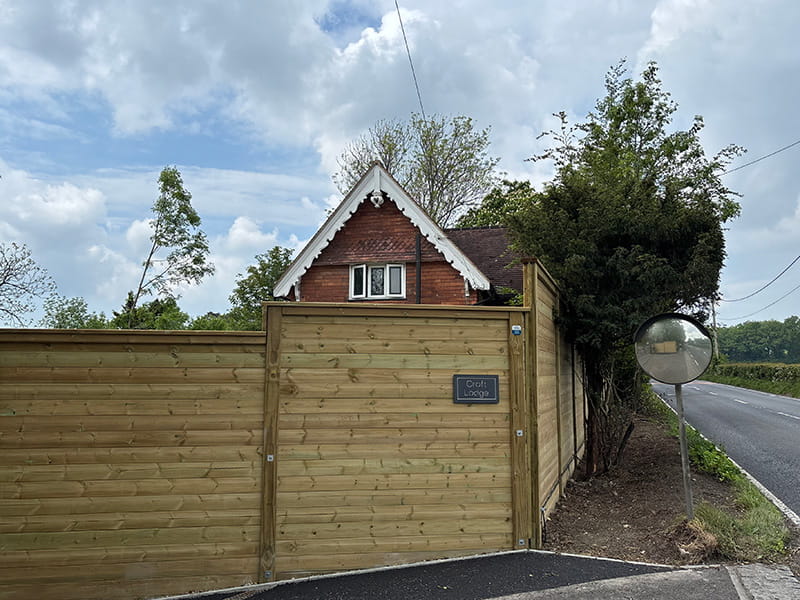
3. Height and positioning
Height plays a major role in noise reduction. If a fence is too low, sound waves will simply travel over the top. This is where the use of an acoustic consultant or sound engineer is recommended, to ensure the correct height is specified. You will also need planning permission if the fence is going to be taller than a typical garden fence.
For best performance:
- The fence should be as high as practical within planning limits
- It should be positioned as close to the noise source as possible
For example, placing acoustic garden fencing near a road boundary will be more effective than positioning it closer to the house.
4. Durability and structure
Because acoustic fencing relies on its density and integrity, it must remain structurally sound over time.
This includes:
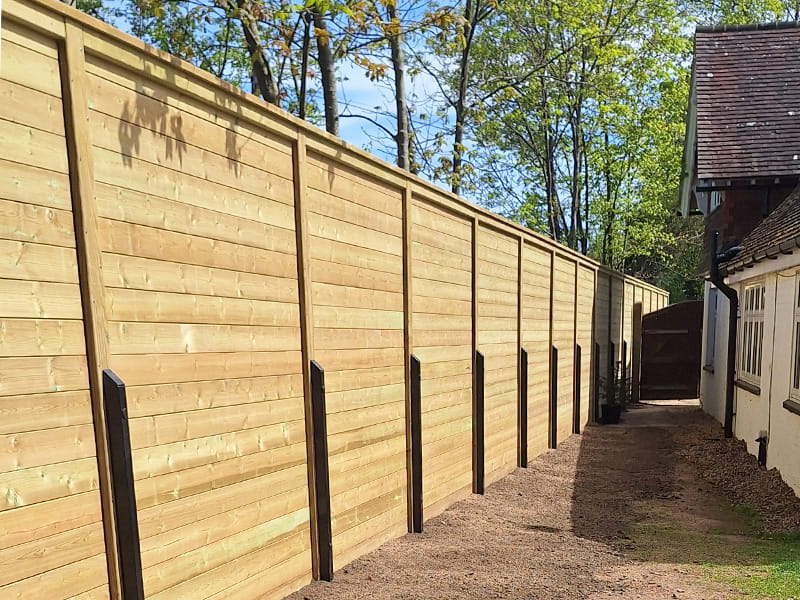
- Strong posts and fixings
- Kiln dried and pressure treated timber that resists warping and gaps forming
- Proper installation methods
- A long guarantee, such as 25 years
A weakened or damaged fence will quickly lose its acoustic performance.
5. Appearance Matters
While performance is crucial, appearance is just as important, especially in a garden setting.
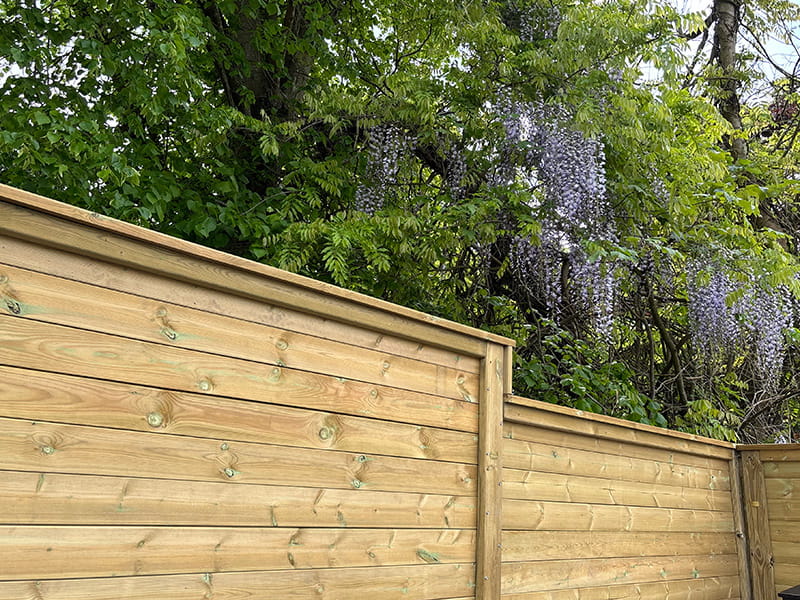
Acoustic fencing should not feel like an industrial barrier. Instead, it should:
- Complement the garden design
- Use natural finishes such as timber
- Provide a clean and uniform look
A well designed acoustic garden fence can enhance the overall space, offering privacy and visual appeal alongside noise reduction. This balance is often overlooked, but it is essential for homeowner satisfaction.
Acoustic garden fencing works as a system
One of the biggest misconceptions is that simply buying ‘acoustic fence panels’ will solve a noise problem. In reality, acoustic garden fencing works as a complete system, not just individual components.
For the best results, all elements must work together:
1. Panels or boards
The boards or panels provide the main sound barrier, but their effectiveness depends on how they are designed, installed, and supported.
2. Posts and Fixings
Posts must be strong and properly spaced to prevent movement. Boards must be securely fixed to posts to prevent gaps and reduce movement.
3. Ground Contact
If there is a gap under the fence, sound will pass straight through. A continuous ground seal or close contact with the ground is essential.
4. Layout and Design
The position of the fence in relation to the noise source is critical. A poorly positioned fence will not deliver the desired results, even if the fence itself is high quality.
5. Surrounding Environment
Walls, buildings and landscaping can all affect how sound behaves. In some cases, combining fencing with other elements such as planting or barriers can improve performance. Again, this is where employing a qualified acoustic engineer is worthwhile; large surrounding surfaces can reflect sound and cause it to bounce around, ultimately reducing the effectiveness of the acoustic fence.
Managing Expectations
It is important to understand that acoustic garden fencing reduces noise rather than eliminating it completely.
Typical benefits include:
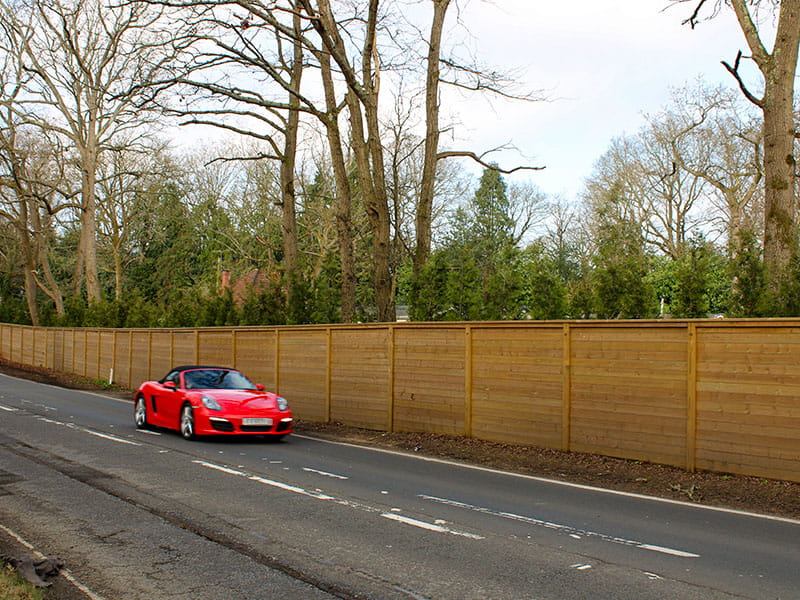
- Reduction in traffic hum and tyre noise
- Less intrusive neighbour sound
- Improved privacy
- A calmer and more usable garden space
Even a reduction of 5 to 10 decibels can make a noticeable difference to how noise is perceived.
Additional Tips for Better Noise Reduction
To maximise the effectiveness of your acoustic garden fencing:
- Choose high quality, purpose-built systems rather than standard fencing
- Ensure professional installation
- View the whole purchase as a long term investment in your health and wellbeing
- Avoid gaps or inconsistencies in the fence line
- Consider combining fencing with landscaping features for added impact
Reducing noise from neighbours and traffic can transform how you use your garden, and acoustic garden fencing is one of the most effective solutions available.
However, the key to success lies in understanding that it is not just simply installing noise reduction fence panels. A truly effective solution considers the entire system, from materials and construction to positioning and appearance.
By investing in a well designed acoustic fencing system that balances performance with visual appeal, you can create a quieter, more enjoyable outdoor space that works for both your practical needs and your garden’s overall look.
Related content:
Read more on how acoustic fencing works and the key factors like height, density, and placement, that make it effective.
Does acoustic garden fencing work?
Read this project about acoustic fencing restoring peace for residents living beside a busy main road.
Acoustic fencing provides peace and quiet for busy main road
Read more about how our Jakoustic® fencing can reduce noise and why it’s the perfect solution for blocking unwanted noise.

Elise is a part of the Jacksons residential marketing team, writing regular columns on gardening, garden design and everything that is garden fencing, gates and structures.