


13/01/2026 12:00 AM
Gates that access fields on farms and rural properties work hard every day. They keep livestock safe, help manage access, and frame the way into fields, yards, and stables. When they are not properly secured, they can invite opportunist thieves, lead to escapes, and cause damage that takes time and money to fix. In this guide, we share practical ways to secure wooden field and farm gates that suit busy working environments with horses, crops, equipment, and vehicles.
Start with the right gate
Security starts with quality. There is no value in installing a secure arrangement on a gate that rots after five years; it does the opposite of what you want to achieve. Choose a gate from a well known manufacturer with a proven specification and a long guarantee; with Jacksons, that means our 25 year Jakcure® timber guarantee. A robust gate with the right treatment gives you a dependable base for any security plan and a better return over the life of the installation.
Why secure field and farm gates
A secure gate protects animals, equipment, and people. This helps ensure:
- Livestock safety and containment for cattle, sheep, and horses
- Control of vehicles entering fields, yards, liveries, and tracks
- Reduced risk of theft, fly tipping, and crop damage
- Fewer call outs and less downtime during busy seasons
Investing in secure field and farm gates is a cost effective way to protect what matters and to keep work moving.
Use heavy duty hardware
Hardware carries the load, so it pays to specify it correctly. Choose galvanised steel hinges and galvanised fixings that resist rust, wear, and tampering in exposed locations. Fit hinge bolts on the inside to reduce the chance of removal. Check that posts, rails, and fixings are aligned, that leaves hang level, and that weight is distributed evenly across the hinge set.
Locking Gates Closed
The easiest way to access a field is by opening a gate, so locking gates securely is essential for protecting livestock, horses, and equipment.
Securing a Single Leaf Gate
The simplest method is to install a cattle proof latch/auto latch and attach a secure padlock through the hole to stop the latch opening, securing the gate to the post.
Another option and a second addition to the above is a secure chain and padlock that loops through the gate and around the post. A heavy duty chain around the gate and post with a robust padlock adds another layer of protection. Keep chains close fitting to reduce leverage points, and choose finishes that stand up to mud, water, and fertiliser.
Securing Double Leaf Gates
Double leaf gates need components that work together:
- Drop bolts as ground anchors to stabilise each leaf; make sure they are lockable to stop someone being able to lift the drop bolts and then force the gates open. Drop bolts can be set into ground sockets or anchors and locked to prevent lift and sway.
- A loop over catch that locks, to bind the leaves securely at the top of the gate.
- An extra step is to add a high quality chain and padlock that loops around both gates as mentioned above.This combination keeps both leaves closed under wind load, reduces rattle, and makes casual attempts to force the gate much harder.
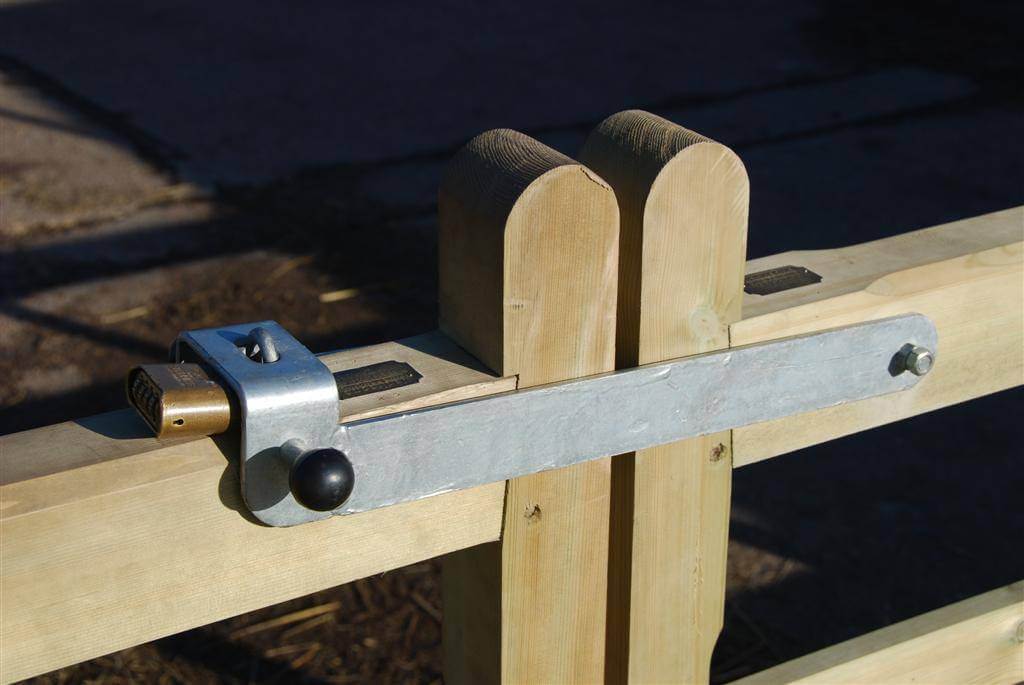
Install a Reliable Locking System
In addition to the above, select locks that suit your access needs and risk level:
Padlocks with hardened shackles for strong, simple security.
Combination locks for shared access on farms with multiple workers.
Fit weather resistant products, position them so they are difficult to cut, and keep keys or codes managed. Where vehicles and livestock share space, choose locking points that do not snag tack, tails, or clothing.
Stop gates being lifted off the hinges
The most common way a gate is removed is by lifting it off the hinges. When fitting a new or existing gate, use our gate anti lift device. It is simple to install and locks with a padlock; stopping the gate being lifted off its hinges and stolen.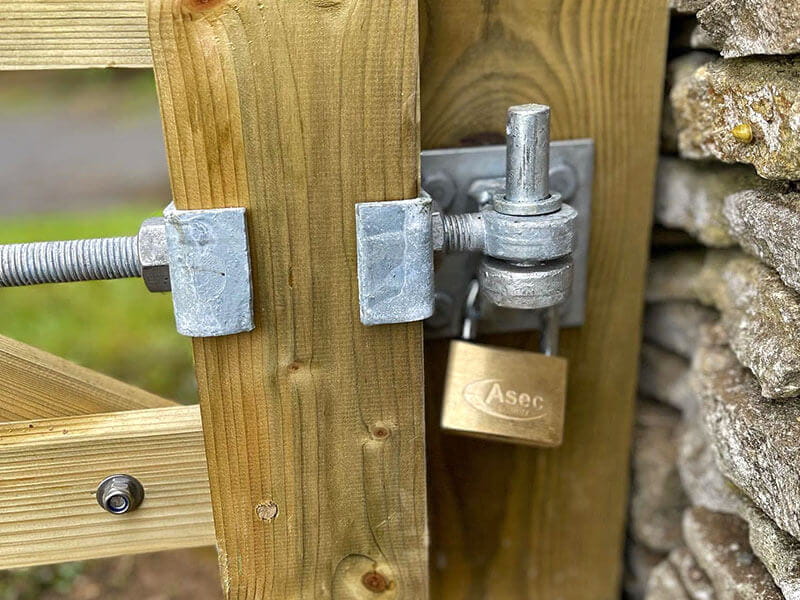
There are some more traditional ways to stop gates from being lifted off their hinges but if there are legitimate reasons that a gate needs to be removed or replaced then these ways can cause complications.
- Rotating the hinges: if the hinges are turned then it makes it difficult to remove the gate. Some would argue that using a hammer to turn the hinges again is the simple solution for an attacker to get around this.
- Flattening, burring, peening the hinge ends: on metal hinges, you can weld or peen (flatten) the top of the hinge pin so the eye cannot slide off.
Position gates well on country lanes
If the gate or field entrance is on a country lane, removing a pull-in can feel inconvenient when accessing a field with a tractor, horsebox, livestock trailer, or similar vehicles. However, if the entrance is rarely used, placing the gate close to the road is good practice for security. It limits space for someone to pull in and inspect the gate for weaknesses, and it makes it harder for an opportunist thief to assess the area without being obvious. They would need to park down the road, and passing traffic is more likely to notice suspicious behaviour.
If the gate will be accessed often, this approach will not be practical. In these cases, local highway authorities typically require enough space for vehicles to stop off the road before opening the gate. Common guidance suggests setting gates back by around three metres from the road edge to allow safe clearance for vehicles.
Gates should never open onto public highways; they must open inwards onto private property. Adequate visibility splays should also be maintained so drivers in both directions can clearly see vehicles accessing the gate.
Reinforce gate posts
No gate can be secure without sound posts. Set posts in concrete to the correct depth for the soil type and the leaf width, and check for rot or movement at ground line. On clay or wet ground, overspec the footing; on chalk, check for voids and pack well. The post is the foundation of a secure field and farm gate. Also remember to select gate post that will not rot and have long guarantees.
Consider electronic security for high risk sites
- Electronic measures can improve deterrence and evidence:
- Gate alarms that trigger on opening or movement
- CCTV that watches the approach and the gate line
- Smart notifications for remote farms or outbuildings
Use signage to make the presence of security clear; it deters casual interference and supports livestock welfare by reducing disturbance.
Keep a simple maintenance routine
Build light, regular checks into existing rounds. Look for loose fixings, hinge wear, play in posts, or damaged locks. Keep moving parts clean and lubricated. Replace worn items before they fail. A few minutes after rain or during stock checks will extend service life and maintain security.
Choosing a Jacksons Gate
For secure field and farm gates, start with a quality timber gate backed by a long guarantee; with Jacksons, that is our 25 year Jakcure® timber guarantee. Add the right hardware, stop gate lift off with an anti lift device, choose appropriate locking, secure double leaves, and position gates carefully on country lanes. Reinforce posts, consider electronic measures where risk is higher, and maintain a simple routine. These steps help protect animals, equipment, and access to fields and farms throughout the year.
Related Content: