


24/03/2026 07:00 AM
Understanding the Differences Between Countryside and Agricultural Fencing
Fencing plays an essential role in rural environments, but countryside fencing and agricultural fencing serve different purposes. There are many products that cross over but there are variations that are designed for different demands. Understanding these differences ensures landowners, farmers, developers, and estate managers select fencing that performs well, complements the landscape, and stands the test of time.
Jacksons products are engineered to the same high standard across the full range. This means strength and longevity are always present, allowing the decision to focus on selecting the most appropriate design or styles of fence for the intended use. All our countryside and agricultural fence styles can be found below:
Countryside and Agricultural Fencing
What Is Countryside Fencing
Countryside fencing is used throughout rural landscapes to create attractive, functional boundaries that blend with the natural environment. It is frequently chosen for appearance as much as practicality.
Common Characteristics of Countryside Fencing
- Blends naturally into rural surroundings
- Used mainly for demarcation rather than containment
- Enhances the landscape without dominating it
- Suitable for estates, pathways, parks, and rural homes
- Commonly built from timber or metal railings with open visibility
Types of Countryside Fencing
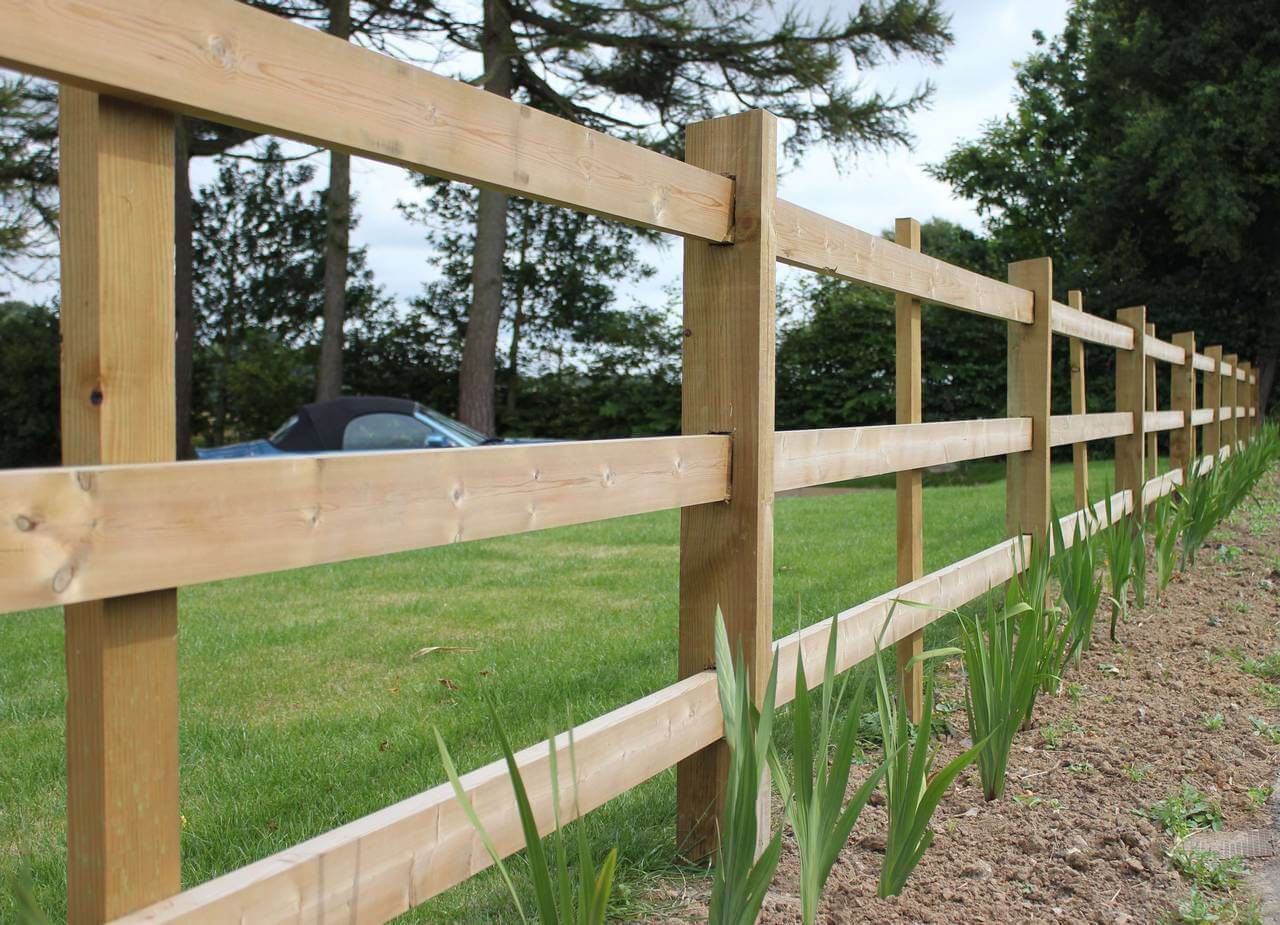
Timber Post and Rail
A natural and traditional option used widely across rural spaces, offering clear boundaries with a classic appearance. Often used for demarcation around rural properties.
Estate Railings
Strong metal railings that offer clean lines and a smart appearance, making them popular for parkland, country estates, and rural development projects.

Chestnut Fencing
A rustic option that suits woodland areas, conservation land, and scenic countryside environments.
Diamond Rail (knee rail)
Diamond Rail, also known as knee rail, is an appealing way to separate countryside fencing from agricultural fencing. It is widely used to protect grass playing fields, safeguard verges, and guide people along footpaths or public rights of way. It provides a gentle, low level barrier while maintaining open views.
Acoustic Fencing for Countryside Settings
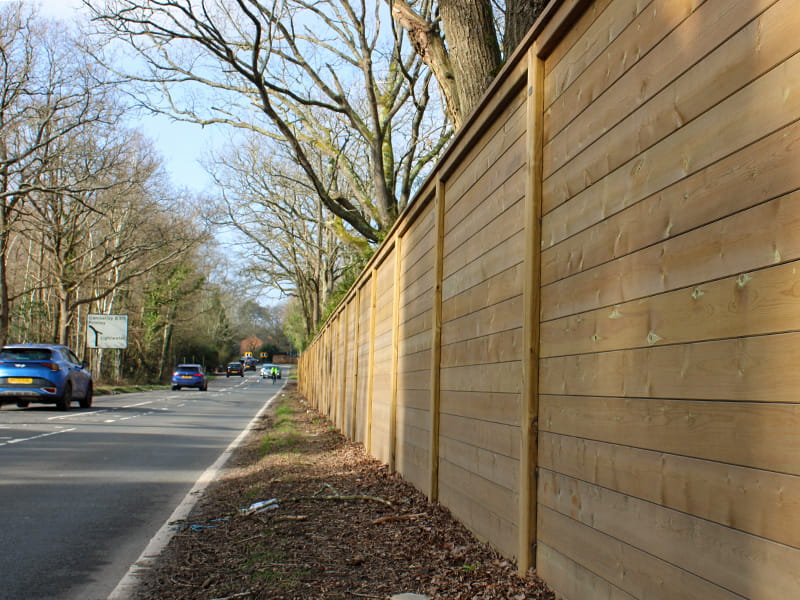
Acoustic fencing is widely used in countryside environments to protect rural homes and outdoor spaces from external noise. It is commonly installed to reduce sound from B roads, railway lines, and general traffic. These fences are usually around two metres in height and use timber tuning fork posts that look attractive while also providing security. It is popular for gardens, golf courses, rural estates, and outdoor areas that require peace without compromising appearance.
Countryside Fencing in New Rural Developments
New build estates in rural areas often select countryside style fencing such as estate railings or post and rail. These choices support biodiversity mitigation techniques that form part of many planning applications. Open and wildlife friendly fence designs help maintain ecological corridors and encourage natural movement of animals across the landscape.
Acoustic barriers are also used widely in rural developments to protect new housing from motorway noise, railway lines, or nearby farms. Timber acoustic systems offer natural aesthetics while creating quieter, more comfortable living environments.
What Is Agricultural Fencing
Agricultural fencing is designed for strength, reliability, and the ability to withstand livestock pressure. Farms, equestrian facilities, and commercial rural sites depend on fencing that can resist leaning, rubbing, and force from large animals.
Common Characteristics of Agricultural Fencing
- Built for livestock containment and safety
- Prioritises strength, durability, and low maintenance
- Resists animal pressure and environmental wear
- Used for cattle, sheep, horses, and commercial rural operations
- Often supported by long guarantees due to heavy use
Types of Agricultural Fencing
Stock Net Fencing
A strong mesh system designed for sheep, cattle, and mixed livestock.
High Tensile Wire
A long lasting and efficient option widely used across large farms.
Barbed Wire
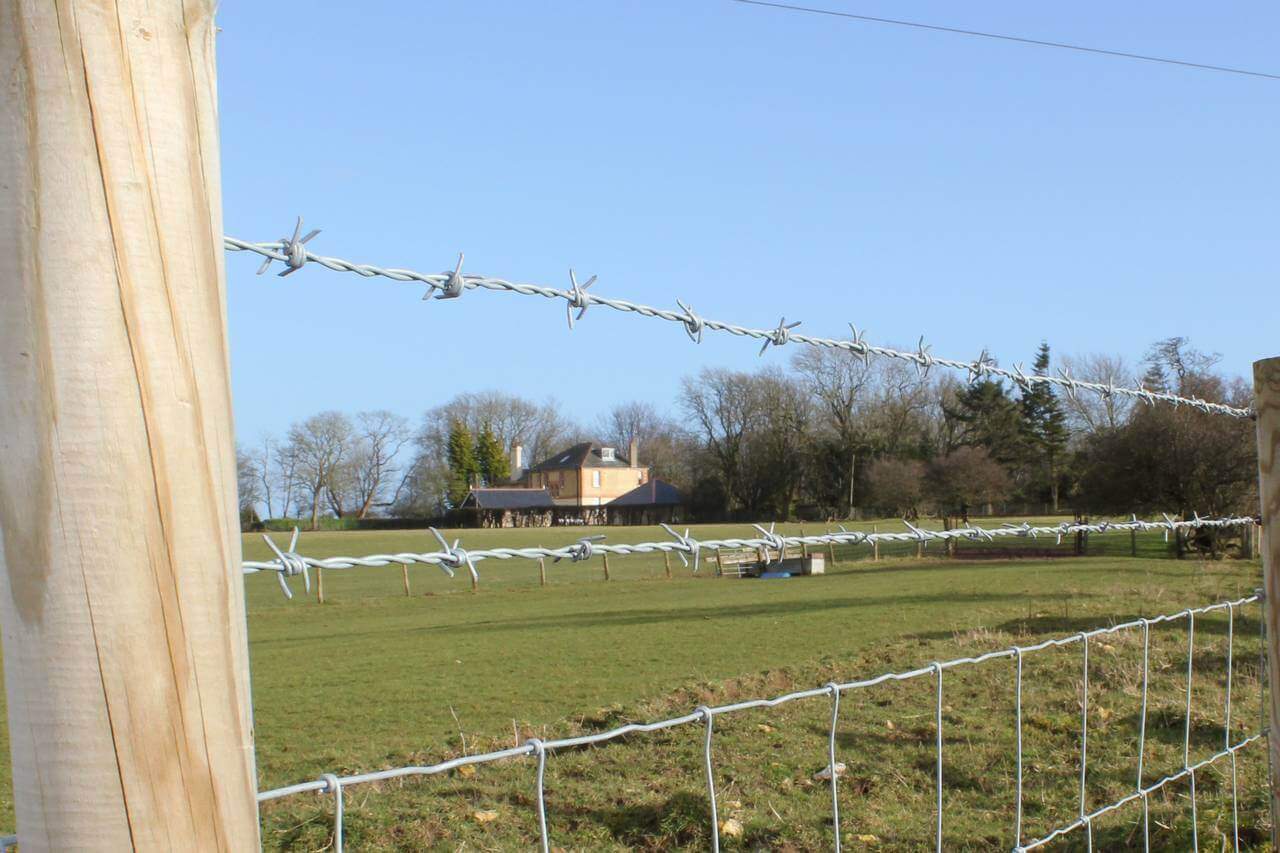
Barbed wire is used extensively in agricultural settings either on its own or installed above stock net or post and rail. It discourages animals from leaning or rubbing and provides a strong physical deterrent for livestock.
Morticed Post and Rail
Morticed Post and Rail is preferred in agricultural environments because the rails sit within the posts rather than being nailed. This creates a stronger structure that withstands livestock pressure. Many people also select morticed designs for homes and estates due to their neat and traditional appearance.
Electric Fencing
Used to discourage livestock from testing boundaries and often installed alongside other fencing systems.
Acoustic Fencing for Agricultural Uses
Acoustic fencing is increasingly used on farms, commercial rural sites, and manufacturing facilities. These systems are usually taller and supported by steel I beams, giving the inner side a more industrial appearance. The absorptive, commercial, and highway grade acoustic systems from Jacksons are well suited to reducing noise from machinery, livestock units, or commercial activity.
Countryside vs Agricultural Gates
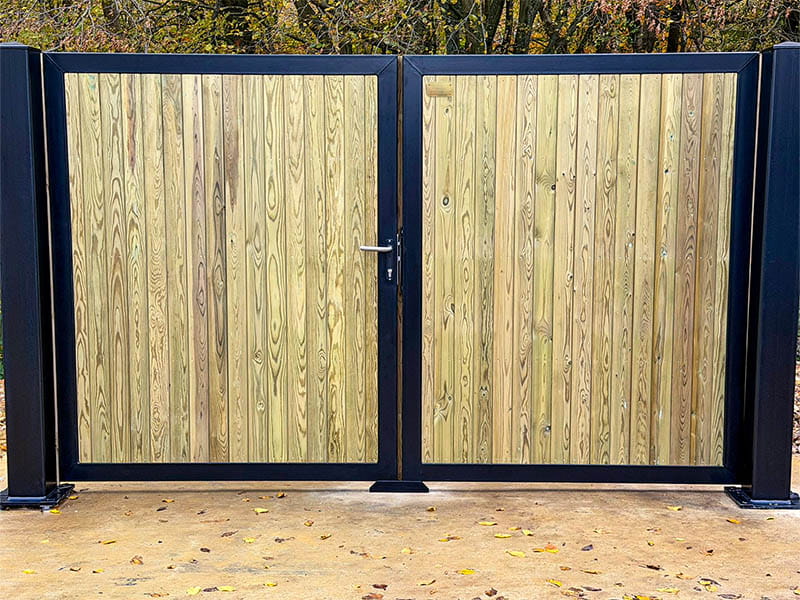
Gates in countryside settings and agricultural environments often serve different purposes, but there is reasonable crossover between products. Many Jacksons gates are built for strength, longevity, and appearance, allowing them to be used in both types of settings.
Gates Common to Both Countryside and Agricultural Locations
Estate Gates
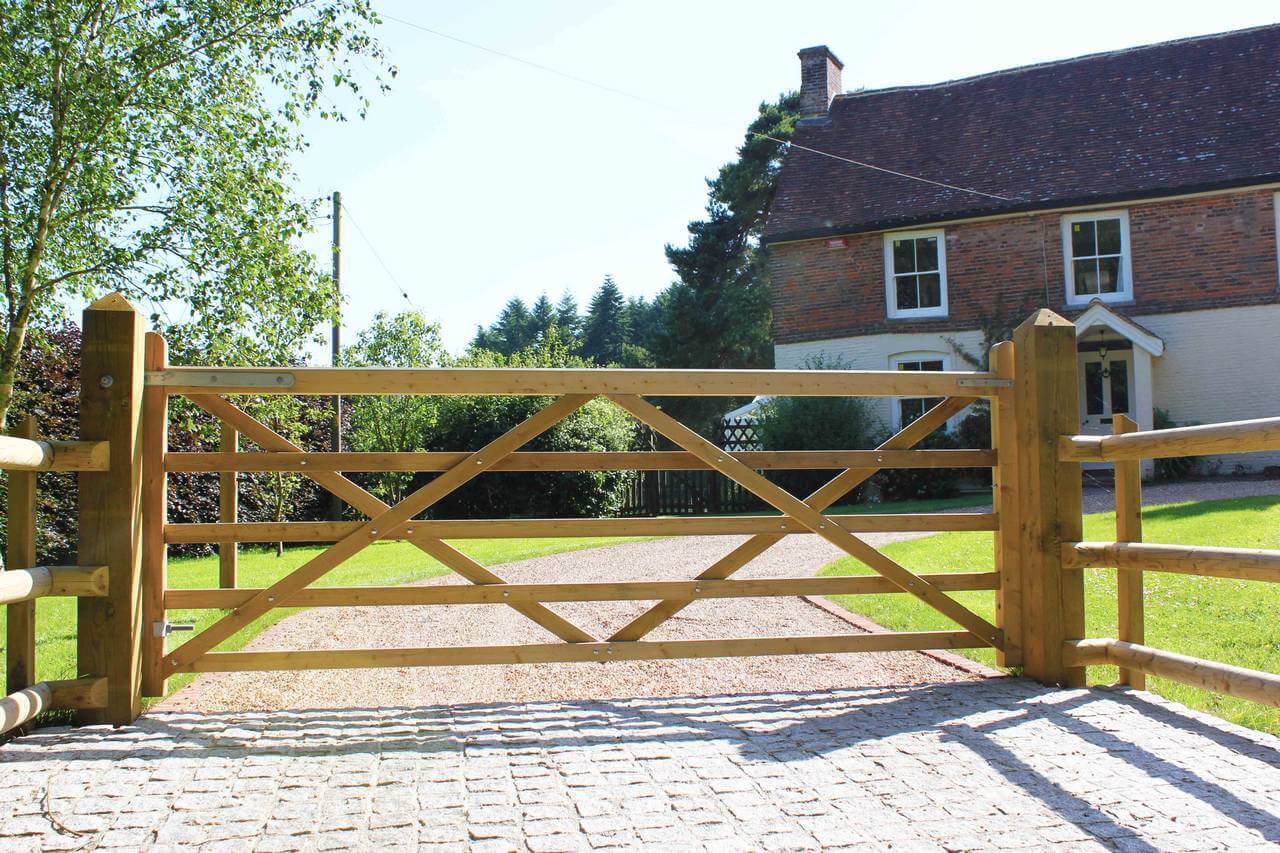
Estate gates offer a classic and attractive entrance solution. They are commonly used at driveway entrances to rural homes and also at entrances to fields where a strong and reliable gate is required. Their appearance makes them widely suitable for both decorative countryside use and agricultural access.
Uni Gates
Uni gates are built for strength and dependable long term performance. They are often used for driveways, entrances to fields, and a range of rural access points. Their versatility and durability make them ideal for both countryside settings and agricultural environments.
Gates Found Mainly in Agricultural Settings
Heavy Metal Field Gates
Heavy metal field gates are designed for the demands of working farmland. They provide secure access for machinery, livestock, and vehicles and would not typically be used for driveways or around rural properties where appearance is a priority.
Kissing Gates
Kissing gates are found on public footpaths and rights of way. They are not suitable for driveways or decorative countryside entrances but are important in agricultural areas where footpaths cross farmland.
Stiles
Stiles are traditional access points that still appear in some rural areas. They are used on countryside footpaths but are not appropriate for agricultural entrances, driveways, or property boundaries.
Gates Found Mainly in Countryside or Residential Rural Settings
Traditional Entrance Gates
Traditional entrance gates are commonly used at rural homes, estates, and courtyards. They offer a refined appearance and are rarely used in agricultural or farm environments where strength and practicality are prioritised over style.
Courtyard Gates
Courtyard gates are decorative and well suited to rural homes, gardens, and estates. They are not so common on farms or agricultural sites as they are aimed to be attractive.
Strength Across Both Categories at Jacksons
Many fencing companies create lighter countryside fencing and heavier agricultural fencing. Jacksons takes a different approach. Every product is engineered for long term strength, durability, and security. This means products such as Post and Rail can be used for decorative countryside boundaries or demanding agricultural environments.
Selecting the Most Suitable Fencing Solution
Choosing the right fencing is less about deciding between countryside or agricultural styles and more about understanding the specific needs of the site. Because all Jacksons products are built to high standards, strength is already ensured. The key is selecting the design that best suits the environment and purpose.
Acoustic fencing is a clear example of this. Reflective and 12k systems are commonly used for gardens, rural homes, and new developments, while our absorptive, commercial, and highway systems are used for industrial farms, manufacturing sites, and commercial premises.
The same applies to gates, post and rail systems with variations in designs. Each product has a specific role, yet all share the same engineering quality. Whether the requirement is livestock containment, biodiversity friendly demarcation, driveway entrances, noise reduction, or quiet rural gardens, Jacksons provides a suitable solution built to last.
Additional resources
Browse the various countryside and agricultural fencing and gate styles in our range:
Countryside and Agricultural Fencing
View the different countryside and agricultural gate styles available throughout our collection:
Countryside and Agricultural Gates
Read our blog on fencing solutions designed for cottages and properties set in countryside landscapes..
Cottage and Rural Property Fencing
Explore our customer story showing how acoustic fencing brought back a calm countryside feel to a rural property:
Acoustic Fencing Helps Reclaim that Countryside Feel
View our commercial barrier range on our sister site, offering solutions for farms and industrial sites in countryside locations:
Commercial Acoustic Barrier Range